

1. Introduction
When choosing plumbing solutions for residential renovation, heating systems, and commercial HVAC projects, PPR aluminum pipe, also known as PPR aluminum composite pipe, stands out from ordinary PPR pipes and PPR fiber pipes. Featuring a unique three-layer composite structure of outer PPR layer, middle aluminum alloy layer, and inner food-grade PPR layer, this pipe perfectly combines the flexibility and sanitation of plastic pipes with the rigidity and stability of metal pipes. Compared with conventional plumbing products, PPR aluminum tube delivers near-zero thermal expansion, excellent oxygen barrier performance, superior high-temperature resistance and anti-aging capability. To help engineers and homeowners make targeted and cost-effective choices, this article comprehensively analyzes the most suitable application scenarios, unsuitable working conditions, and professional selection guidelines for PPR aluminum pipe.
2. What is PPR Aluminum Pipe? Core Structural Advantages
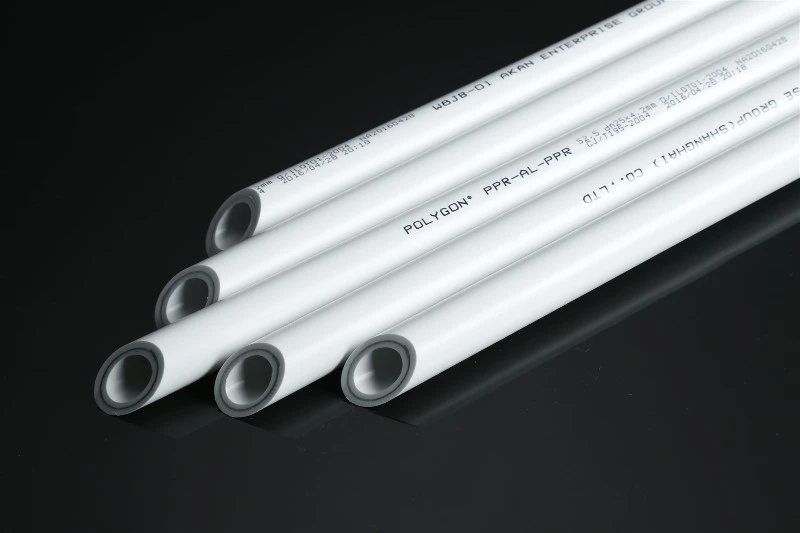
PPR aluminum pipe is a high-performance composite pressure pipe formed by co-extrusion and compound molding. The internal aluminum alloy layer serves as the core supporting structure, while the double-layer PPR material ensures water supply safety and corrosion resistance. This special structural design endows the pipe with unique performance advantages that determine its exclusive application scenarios in hot water and heating systems:
Near-zero linear thermal expansion: The aluminum layer completely restrains the thermal stretching deformation of PPR material, effectively solving the common problems of bending, sagging and wall cracking caused by hot water circulation in ordinary PPR pipes.
Excellent oxygen barrier performance: The dense aluminum layer isolates external oxygen penetration, avoiding oxidation corrosion of boilers, water pumps and pipeline accessories, and inhibiting algae and bacterial growth in closed heating water systems.
High rigidity and shape retention: Different from flexible pure PPR pipes, PPR aluminum pipe has excellent straightness and structural stability, maintaining a neat pipeline layout for long-distance piping.
Durable high-temperature resistance: It can operate stably in long-term hot water circulation environments, adapting to continuous high-temperature working conditions that ordinary plastic pipes struggle to bear.
3. Best Application Scenarios for PPR Aluminum Pipe PPR
3.1 Whole-house Hot Water Recirculation Systems
This is the most mainstream and core application scenario for PPR aluminum pipe. In modern high-end home decoration, whole-house instant hot water systems require 24-hour hot water circulation. Ordinary PPR pipes are prone to thermal expansion and bending after long-term high-temperature water flow, resulting in pipeline displacement, wall hollowing and unattractive piping. PPR aluminum tubing eliminates thermal deformation thoroughly, keeping hot water pipelines straight and stable for a long time. It is perfectly suitable for residential constant-temperature hot water supply and full-house hot water recirculation projects.
3.2 Floor Heating & Radiator Closed Heating Systems
As a standard high-end heating pipe in European plumbing industry, PPR aluminum pipe features outstanding oxygen barrier capability. In closed floor heating and radiator systems, oxygen penetration will cause electrochemical corrosion of heating equipment and produce microbial sludge inside the pipes. The aluminum layer of PPR aluminum pipe completely blocks oxygen infiltration, protecting boilers, circulating pumps and heating fittings from corrosion, reducing system maintenance frequency, and extending the service life of the entire heating system.
3.3 Exposed Piping & Ceiling Concealed Hot Water Mains
Exposed and ceiling-mounted hot water pipelines have high requirements for pipe stability and appearance. Ordinary PPR pipes will gradually sag and deform after long-term hot water operation, affecting indoor aesthetics and even causing hidden safety hazards. With high rigidity, PPR aluminum pipe maintains permanent straightness in exposed environments, with no sagging or distortion. It is the preferred pipe for villa exposed hot water piping and apartment ceiling concealed hot water main pipelines.
3.4 Villa & Large-space Long-distance Water Supply
Large villas and duplex houses require ultra-long horizontal water supply pipelines. Pure PPR pipes need dense pipe clamp fixing due to poor rigidity, and are still prone to telescopic displacement after temperature changes. PPR aluminum composite pipe has excellent structural stability, adapting to long-distance uninterrupted piping layout. It reduces the use of pipe fixing accessories, simplifies construction, and avoids hidden deformation risks in later use.
3.5 Commercial HVAC & Constant-temperature Water Systems
For hotels, office buildings, shopping malls and other commercial venues, water supply and HVAC systems need long-term uninterrupted operation. PPR aluminum pipe performs stably in constant-temperature hot water circulation and central air-conditioning water loop systems, with low aging rate and low failure rate. Its excellent high-temperature stability and anti-corrosion performance meet the long-term and high-frequency operation requirements of commercial engineering projects.
3.6 Old House Renovation & Plumbing Upgrading Projects
The pipeline laying environment of old house renovation is complex, with variable temperature and humid construction conditions. Traditional pipes are easy to age and deform after renovation. PPR aluminum pipe features strong environmental adaptability, anti-aging and anti-deformation capabilities. It can effectively solve the problem of short service life of renovated pipelines and improve the overall stability of the water supply system.
4. Unsuitable Scenarios for PPR Aluminum Pipe
Although PPR aluminum pipe has comprehensive performance advantages, it is not suitable for all working conditions. Blind use will cause waste of cost and performance redundancy. The following scenarios are not recommended:
Ultra-high pressure industrial pipelines: PPR aluminum pipe is designed for civil and conventional commercial water supply, and cannot adapt to PN25 and above ultra-high pressure industrial working conditions.
Pure cold water single pipe systems: For conventional cold water piping with no high temperature and heating demand, ordinary PPR pipe or PPR fiber pipe is more cost-effective, while PPR aluminum pipe has obvious performance redundancy.
Deeply buried underground pipelines: Long-term humid underground soil environment may cause oxidation damage to the intermediate aluminum layer, affecting pipeline stability.
Corrosive chemical fluid delivery: It is not applicable for industrial corrosive liquid transportation, only limited to civilian water supply and heating media.
5. PPR Aluminum Pipe vs Ordinary PPR / PPR Fiber Pipe Selection Guide
To help users quickly complete accurate selection, we summarize the most practical matching logic for three mainstream PPR plumbing products:
To help users quickly complete accurate selection and intuitively distinguish the differences between mainstream plumbing pipes, we have sorted out a detailed performance and scenario comparison table for ordinary PPR pipes, PPR fiber pipes and PPR aluminum pipes:
|
Comparison Parameter |
Ordinary PPR Pipe |
PPR Fiber Pipe |
PPR Aluminum Pipe |
|
Core Performance |
Basic corrosion resistance, obvious thermal expansion and deformation, low rigidity |
Low thermal expansion, high rigidity, good pressure resistance, no oxygen barrier function |
Near-zero thermal expansion, excellent oxygen barrier, ultra-high stability |
|
Hot Water Adaptability |
General, prone to bending and sagging after long-term hot water circulation |
Good, effectively reduces thermal deformation of hot water pipes |
Excellent, completely eliminates hot water pipeline deformation, stable for long-term circulation |
|
Heating System Adaptability |
Poor, easy oxygen penetration causes equipment corrosion and algae growth |
Medium, no oxygen barrier capability, not recommended for closed heating systems |
Excellent, professional oxygen barrier design, protects heating equipment and prolongs system service life |
|
Exposed & Long-distance Piping |
Not applicable, serious deformation and poor appearance |
Basically applicable, partial sagging may occur in ultra-long-distance piping |
Fully applicable, permanent straightness, neat piping and no deformation |
|
Cost Performance |
Highest cost performance, low price |
High cost performance, moderate price, suitable for most civil projects |
High-end positioning, slightly higher cost, professional performance advantages |
|
Best Application Scenarios |
Conventional cold water piping, budget-oriented simple water supply projects |
Residential and commercial cold & hot water plumbing, light industrial water supply, conventional floor heating |
Whole-house hot water recirculation, closed heating systems, exposed piping, long-distance commercial water supply, high-end decoration |
6. Professional Installation Notes
PPR aluminum pipe adopts standard heat fusion welding process, but due to the built-in aluminum layer, the heating process needs standardized operation to avoid damaging the composite structure. It is necessary to control the welding temperature at 260±10°C, avoid excessive heating which may melt and damage the intermediate aluminum layer. During piping layout, make full use of its high rigidity to reduce unnecessary pipe clamps, and keep the pipeline straight and neat. Professional standardized installation can maximize the service life and stability of PPR aluminum pipe.
7. Conclusion
PPR aluminum pipe is a professional high-end composite pipe specially designed for hot water and heating systems. Different from ordinary PPR plastic pipe and PPR fiber pipe, its core advantages of zero thermal deformation and oxygen barrier performance make it irreplaceable in whole-house hot water circulation, floor heating/radiator heating, exposed piping and long-distance commercial water supply scenarios. For conventional cold water pipelines, choosing ordinary PPR or PPR fiber pipe is more economical. Scientific selection based on actual application scenarios can balance project cost and long-term operating performance perfectly.
8. FAQ
Q:Is PPR aluminum pipe better for hot water?
Answer: Yes. PPR aluminum pipe eliminates thermal deformation of hot water pipelines and has excellent stability in long-term hot water circulation, which is far more suitable for hot water systems than ordinary PPR pipes.
Q: Can PPR aluminum pipe be used for floor heating?
Answer: Absolutely. Its outstanding oxygen barrier performance can protect floor heating equipment from oxidation and corrosion, making it a high-quality pipe for closed floor heating systems.
Q:Which is better, PPR fiber or PPR aluminum pipe?
Answer: It depends on scenarios. PPR fiber pipe is cost-effective for cold water and conventional plumbing; PPR aluminum pipe is more stable and professional for hot water and heating systems.


